
The Hidden Costs of a Bad Route: How Site Access Planning Drive Project Profitability
When it comes to successful site access, most people immediately think about mats, equipment, or manpower. But before a single truck can roll onto a jobsite, before materials are delivered, and before installation crews mobilize, there’s one foundational step that determines whether a project runs smoothly or spirals into delays and added costs:
THE HIDDEN COSTS OF A BAD ROUTE PLAN
PROACTIVE ROUTE PLANNING
Route planning isn’t just a logistical formality. It’s the first and most critical step in building a safe, efficient, and compliant site access strategy. Done well, it minimizes time, fuel consumption, equipment wear, and environmental impact. Done poorly, it can create bottlenecks, damage sensitive ground, and introduce unnecessary risk. If you’re new to site access planning or even if you’ve managed dozens of projects, starting with a clear, strategic route plan is essential. Let’s break down why.
Why Route Planning Drives Bottom Line Success
Every jobsite has constraints. Some are obvious, like steep terrain or wetlands. Others are less visible, like right-of-way limitations or turning radius requirements for heavy equipment.
When you plan your route first, you can:
- Reduce mobilization time
- Lower fuel and transportation costs
- Protect equipment from avoidable strain
- Prevent environmental violations
- Improve overall project timelines
All of these factors compound into your profitability.
Route planning creates a framework for every decision that follows — from load calculations to mat selection to restoration.
Think of it this way: if you choose the wrong path into a site, every other decision becomes reactive instead of proactive, creating costly delays.
There’s four factors to consider when planning site access:
- Right-of-Way Restrictions
- Natural Features or Terrain
- Understanding Existing Roadways
- Vehicle Maneuverability
Combined, these have an impact on project costs, timeline, and overall success. We break down what to consider each step of the way.
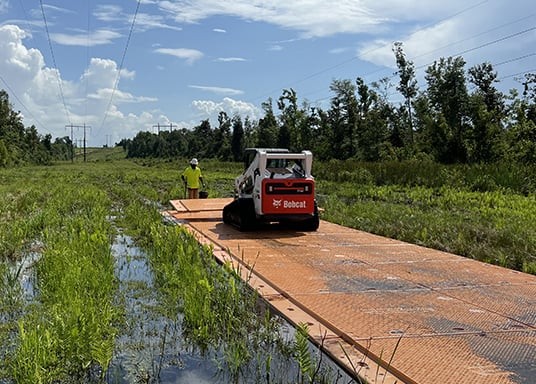
Factor #1: Right-of-Way Restrictions
One of the first questions to answer is simple: Where are you legally allowed to go?
In many utility, transmission, and infrastructure projects, crews are confined to a designated right-of-way (ROW). These boundaries can significantly restrict movement, staging, and access angles.
If you’re operating within a limited ROW:
- Equipment may have minimal clearance for turning or staging
- Access lanes may need to be reinforced
- Temporary deviations may require approvals
In some cases, you may need to negotiate with adjacent landowners for temporary access outside the designated corridor. Failing to identify these restrictions early can result in delays, legal issues, or costly rework.
Route planning means confirming boundaries before you mobilize — not after a crew is already on site.
Factor #2: Natural Features and Terrain
No two sites are identical. Terrain plays a major role in determining how and where equipment can safely travel.
Common natural obstacles include:
- Rivers and creeks
- Wetlands
- Ravines
- Steep slopes
- Soft or unstable soils
Ignoring these features during planning can lead to serious consequences—stuck equipment, environmental damage, erosion issues, or safety hazards. Instead, evaluate:
- Soil bearing capacity
- Drainage patterns
- Seasonal weather impacts
- Sensitive environmental zones
In more complex environments, collaborating with environmental specialists can help you minimize disturbance and ensure compliance with local, state, or federal regulations. Sometimes the most efficient route on paper isn’t the most responsible route in practice.
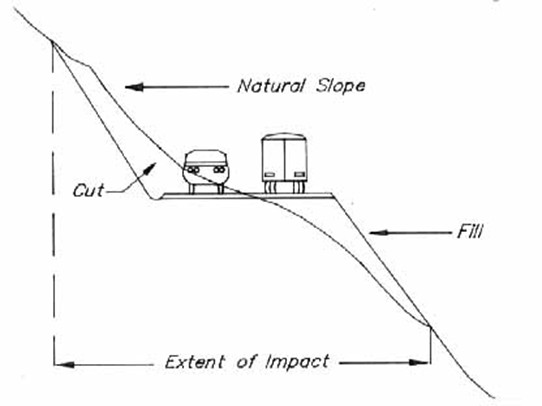
Proper planning may mean rerouting entirely, reinforcing access paths, or building temporary crossings. The key is identifying those needs before equipment arrives.
Factor #3: Leverage Existing Roads
Whenever possible, use infrastructure that’s already there.
Existing roads, whether paved or gravel, reduce the need for additional ground disturbance. They often provide:
- Faster mobilization
- Lower installation costs
- Reduced environmental impact
- Simplified permitting
However, don’t assume an existing road automatically solves your access challenges. Consider:
- Road width and weight limits
- Bridge load ratings
- Turning radii
- Local traffic patterns
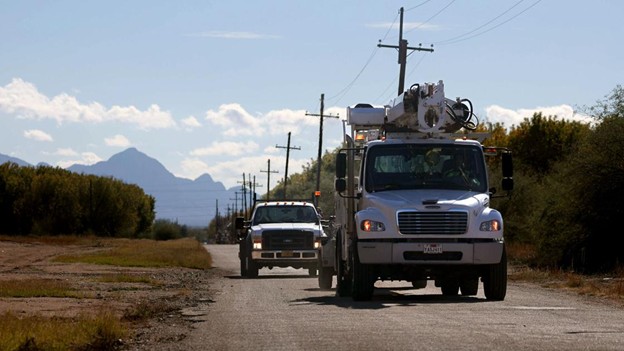
A narrow rural road might technically reach your site but create congestion or safety concerns for large vehicles. Proper route planning verifies that the infrastructure can handle your operational demands.
Factor #4: Vehicle Maneuverability
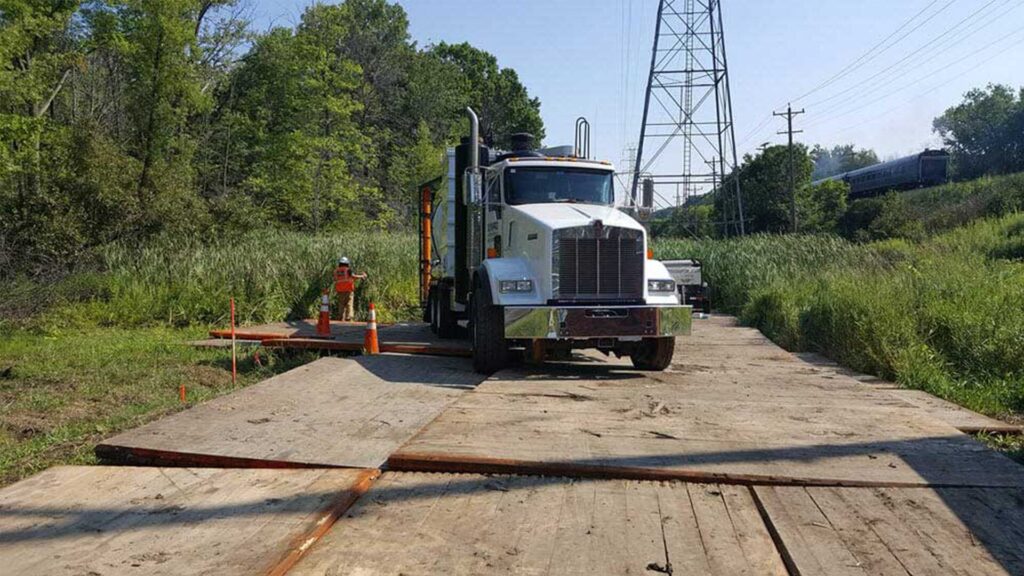
Heavy equipment doesn’t move like a pickup truck. When planning your route, you need to consider:
- Turning radius
- Staging space
- Equipment length and width
- Trailer swing clearance
- Ability to safely turn around
Confined spaces within a right-of-way or between natural obstacles can create pinch points. If vehicles can’t maneuver effectively, you risk:
- Equipment damage
- Increased idle time
- Safety incidents
- On-site congestion
Route planning should include identifying turnaround areas, staging zones, and contingency paths in case access becomes temporarily blocked.
COMMON ROUTE PLANNING MISTAKES
Even experienced teams sometimes skip critical evaluation steps. Here are some of the most common mistakes:
- Planning for Ideal Conditions
Designing a route based on dry, stable ground when the project will run during rainy seasons is a recipe for failure. Always plan for realistic and sometimes worst-case conditions.
- Ignoring Expansion Needs
Will the project grow? Will additional equipment need access later? Planning only for immediate needs can create costly redesigns mid-project.
- Underestimating Load Impacts
Repeated equipment traffic can degrade soil faster than anticipated. Route planning must account for frequency—not just weight.
- Overlooking Permitting and Compliance
Environmental and regulatory considerations must be integrated into route planning from the start. Retroactive approvals rarely go smoothly.
THE BIGGER PICTURE: ROUTE PLANNING IS RISK MANAGEMENT
At its core, planning your route is about reducing risk. Risk to your:
- Budget
- Schedule
- Equipment
- Crew safety
- Environmental compliance
- Reputation
When you take the time to map out the most efficient and practical path for vehicles and heavy equipment, you’re not just creating a road—you’re building predictability into your project. That predictability translates to confidence for stakeholders, owners, contractors, and crews alike.
THE BIGGER PICTURE: ROUTE PLANNING IS RISK MANAGEMENT
Whether site access is new to you or something you’ve dealt with for decades, the most important shift is this: Access is not an afterthought. It is infrastructure.
Treat your access route with the same level of attention you’d give to foundation work or structural design. It supports everything else. Before selecting materials. Before mobilizing crews. Before scheduling deliveries. Plan your route.
BUILD YOUR ACCESS STRATEGY THE RIGHT WAY
Learn more about site access planning and start building your access strategy.
COMPANY INFO
Sterling is a leading provider of cross laminted timber products in the United States. With manufacturing locations in Illinois and Texas, Sterling supports the site access and building construction industries with their revolutionary TerraLam product line.
- (708) 388-2223
-
501 E 151st St
Phoenix, IL 60426